How Is Fiber Laser Marking Done on Metal?
Fiber laser marking on metal is an industrial marking method that enables logos, serial numbers, barcodes, QR codes, production codes, technical information and brand marks to be permanently applied to product surfaces. This process is widely used in industries such as automotive, machine manufacturing, metal processing, medical products, defense, electrical-electronics and jewelry.
Fiber laser marking machines provide high-precision, contactless and permanent marking results on metal surfaces. Since no mechanical pressure is applied to the product surface, the process can be performed in a more controlled and repeatable way.
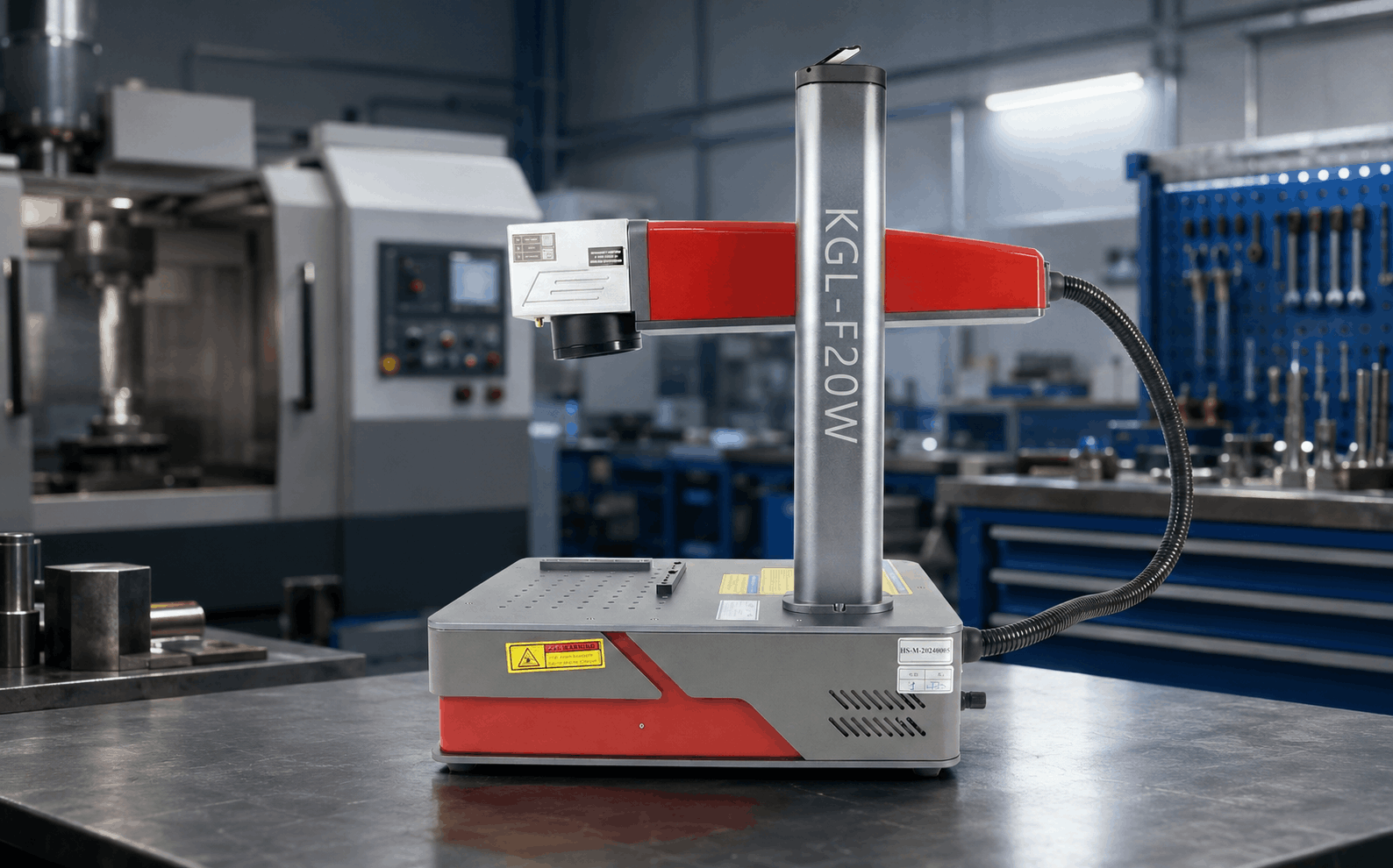
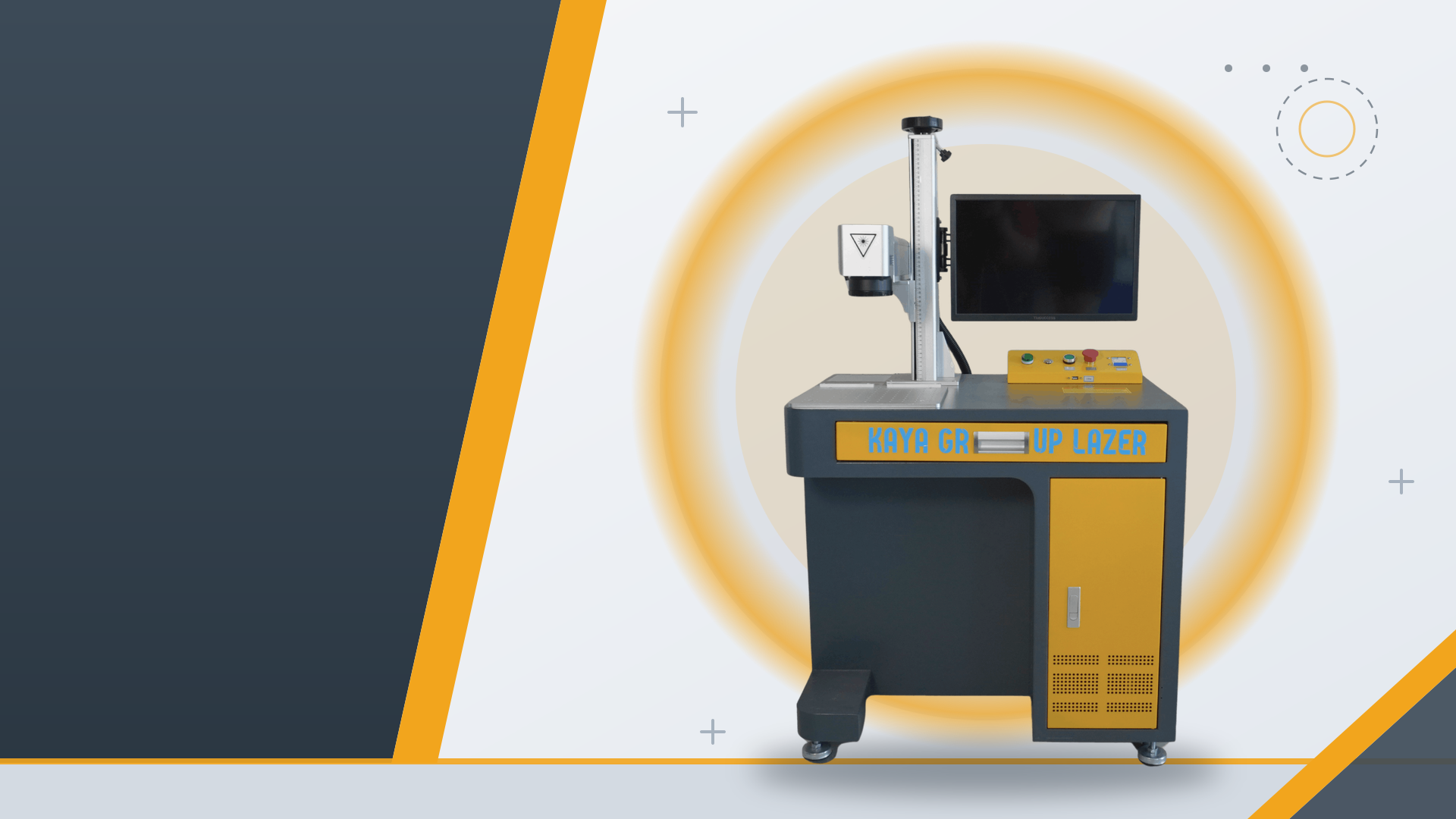
Kaya Grup Lazer offers 20W, 30W, 50W, 100W, portable and desktop fiber laser marking machine solutions for different metal surfaces and production needs.
What Is Metal Laser Marking?
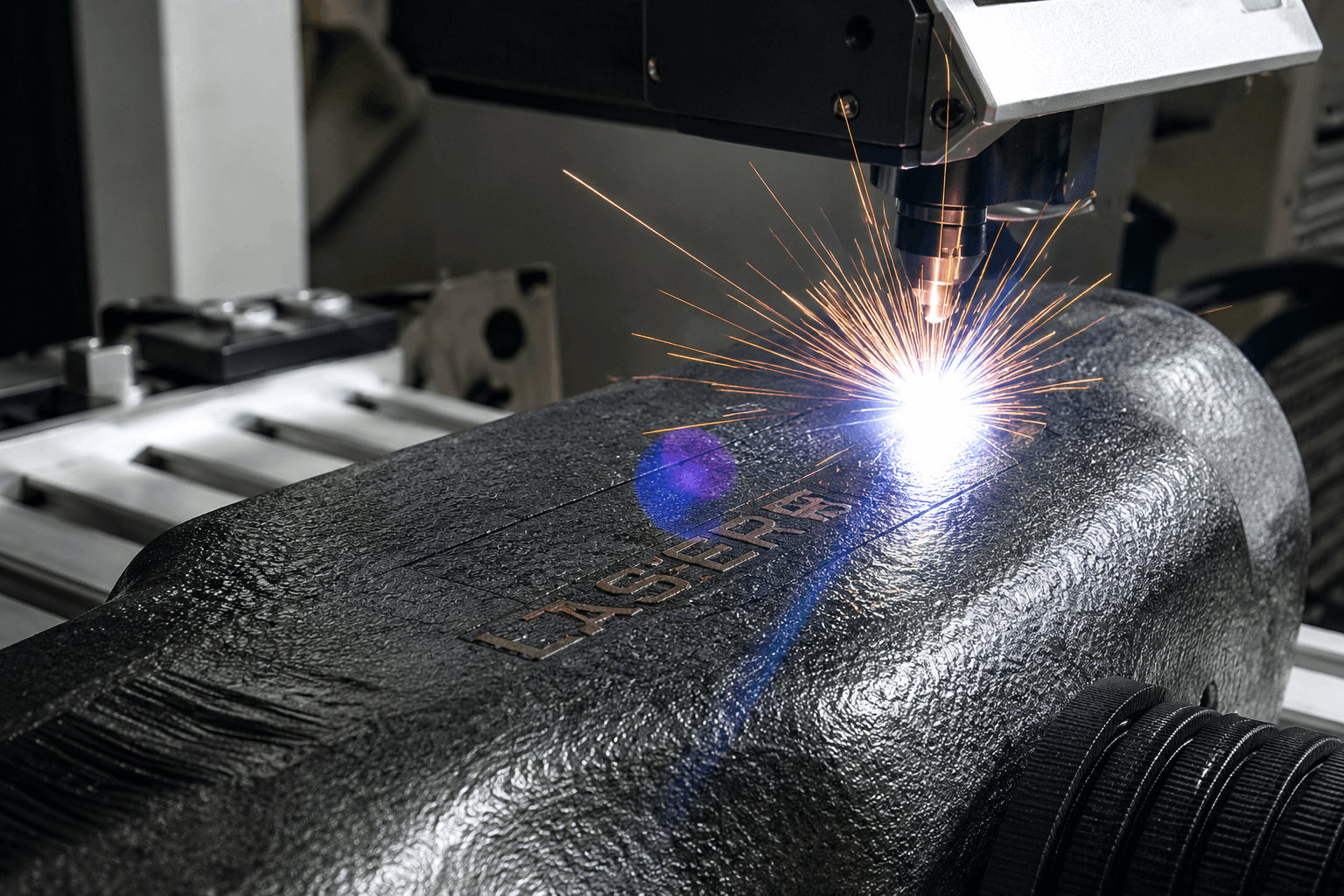
Metal laser marking is the process of creating permanent marks on metal surfaces using a laser beam. During this process, no physical contact is applied to the product. The laser beam interacts with the surface in the defined area to create text, logos, codes or graphics.
Metal laser marking provides important advantages for product tracking, quality control, brand visibility, serial number tracking and production traceability.
How Does a Fiber Laser Marking Machine Work on Metal?
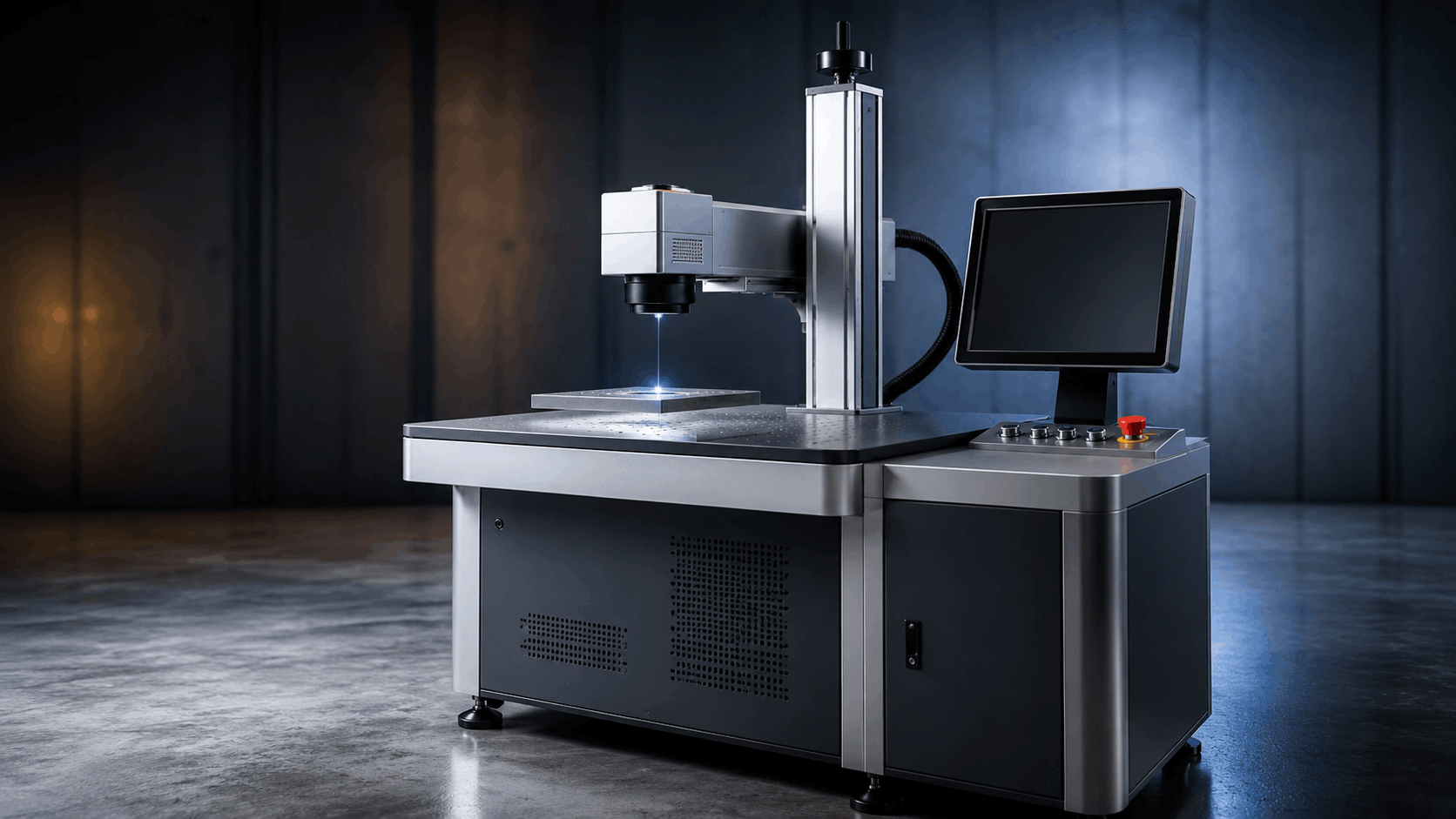
A fiber laser marking machine directs a high-density laser beam onto the metal surface. The laser beam moves according to a design or code file prepared on a computer.
The general process is as follows:
The metal part to be marked is placed on the machine table or marking area.
The logo, text, serial number, barcode or QR code design is prepared in the software.
The lens and marking area are selected according to production needs.
Laser power, speed and frequency settings are adjusted according to the material type.
The fiber laser beam is applied to the metal surface.
Permanent marking is obtained at the end of the process.
This process can be applied manually, semi-automatically or integrated into a serial production line depending on production requirements.
What Can Be Marked on Metal?
Fiber laser marking machines can be used for many different types of markings on metal surfaces.
Logo Marking
A brand logo can be permanently and clearly marked on the product. This application is important for product identity and brand visibility.
Serial Number Marking
Serial number marking is used for product tracking and production traceability. It is especially critical in industries such as automotive, medical, defense and machine manufacturing.
Barcode and QR Code Marking
Fiber laser marking machines can mark readable barcodes and QR codes on metal surfaces. These codes can be used for inventory tracking, production control and digital data access.
Technical Information and Part Code Marking
Part codes, production dates, model information, measurements, quality codes and technical symbols can be permanently applied to metal surfaces.
Decorative Marking
In jewelry, accessories, promotional products and design items, decorative patterns, names or custom graphics can be marked on metal surfaces.
Which Metals Can Be Marked with Fiber Laser?
Fiber laser marking machines can be used on many metal surfaces. However, surface structure, alloy type, coating and marking expectations affect the correct machine settings.
Fiber laser marking can be used on:
Stainless steel
Aluminum
Brass
Copper
Iron
Steel
Titanium
Metal alloys
Anodized aluminum
Painted metal surfaces
Metal labels
Industrial metal parts
Ideal laser power, speed and frequency settings may differ for each metal surface. Therefore, material-specific testing and technical evaluation are important for the best result.
Fiber Laser Marking on Stainless Steel
Stainless steel is one of the most commonly processed metal surfaces with fiber laser marking machines. It can be used in industrial parts, medical equipment, kitchen equipment, machine parts and metal label production.
The following markings can be applied on stainless steel:
Logo
Serial number
QR code
Barcode
Technical symbols
Production date
Part code
Marking quality on stainless steel is directly related to the correct power, speed, frequency and lens selection.
Laser Marking on Aluminum
Aluminum laser marking is frequently used for lightweight metal parts, automotive components, electronic parts, profile products and industrial labels.
On anodized aluminum surfaces, fiber laser marking can provide strong results in terms of contrast and readability. However, surface coating and marking expectations should be evaluated carefully.
Why Are Serial Number and QR Code Marking Important on Metal?
Serial number and QR code marking on metal products plays a critical role in production tracking and traceability. These codes can be used to track which production line a product came from, when it was produced and which batch it belongs to.
These applications are especially important in:
Automotive spare parts
Machine equipment
Medical products
Defense industry parts
Electrical and electronic products
Industrial metal labels
Quality control processes
Fiber laser marking ensures that this information remains permanently on the product surface.
Is Fiber Laser Marking Permanent?
Yes, fiber laser marking is a permanent marking method. Since the mark is created by laser interaction on the surface, it can be more durable than methods such as ink, labels or printing.
Permanent marking is especially important for product tracking, quality control and industrial identification. However, marking durability may vary depending on material type, surface structure, laser settings and marking depth.
Differences Between 20W, 30W, 50W and 100W Fiber Laser Metal Marking
When marking metal with a fiber laser, machine watt power affects marking speed and depth. The highest watt power is not necessary for every business; the right choice should be made according to production needs.
20W Fiber Laser Marking
20W fiber laser marking machines are suitable for logos, serial numbers, barcodes, QR codes and light surface marking. They can be preferred for small metal parts and low to medium production volume.
30W Fiber Laser Marking
30W fiber laser marking machines are faster and stronger than 20W models. They can provide more efficient results in standard metal marking applications.
50W Fiber Laser Marking
50W fiber laser marking machines are suitable for intensive production, deeper marking and industrial metal parts. They provide advantages in automotive, machine manufacturing and metal processing industries.
100W Fiber Laser Marking
100W fiber laser marking machines can be preferred by businesses that need heavy industry applications, high production volume and strong marking performance. They can be used on more challenging metal surfaces and deep marking applications.
When Should Portable Fiber Laser Marking Be Preferred for Metal Parts?
Portable fiber laser marking machines are preferred when large or difficult-to-move metal parts need to be marked. If the part cannot be moved to the machine or on-site marking is required, portable systems provide an advantage.
Portable fiber laser marking can be preferred for:
Large metal parts
Heavy equipment
Fixed production parts
Large machine bodies
Difficult-to-move metal products
On-site marking needs
What Is Desktop Fiber Laser Marking Used for in Metal Production?
Desktop fiber laser marking machines are suitable for regular marking of small and medium-sized parts. They are preferred in production processes where products are placed on the machine table and processed within a defined marking area.
Desktop fiber laser marking machines are suitable for:
Serial number marking
Metal label processing
Small part marking
Jewelry and accessories
Industrial part coding
Logo and barcode marking
Which Industries Use Metal Laser Marking?
Metal laser marking is used in many industries for permanent identification and traceability.
Main industries include:
Automotive
Machine manufacturing
Medical products
Defense industry
Electrical and electronics
Jewelry
Metal processing
Plastic injection mold parts
Industrial production
Promotional products
Eyewear and accessories
In these industries, fiber laser marking is a powerful solution for product identification and production process tracking.
What Should Be Considered When Choosing a Fiber Laser Marking Machine for Metal?
Choosing the right fiber laser marking machine is very important for businesses that mark metal surfaces. Incorrect watt power, insufficient lens area or unsuitable machine type may reduce production efficiency.
The following criteria should be evaluated:
Metal type
Surface coating
Product size
Marking area
Daily production volume
Required marking depth
20W, 30W, 50W or 100W requirement
Portable or desktop use
Barcode/QR code readability
Software ease of use
Technical service support
Spare part availability
The right selection directly affects both production quality and long-term machine efficiency.
What Affects Metal Laser Marking Machine Prices?
Metal laser marking machine prices vary depending on watt power, lens structure, laser source quality, galvo head system, machine type, software features, technical service support and spare part availability.
There may be price differences between portable fiber laser marking machines and desktop models. Similarly, 20W, 30W, 50W and 100W machines have different investment levels.
When evaluating price, businesses should consider not only the purchase cost but also production speed, marking quality, service life and after-sales support.
Why Is After-Sales Support Important?
Fiber laser marking machines are long-term production investments. Therefore, technical service, installation, operator training, maintenance support and spare part supply should be evaluated during the purchasing process.
For businesses engaged in serial production, machine downtime directly means production loss. Fast technical support and a reliable service structure are critical for production continuity.
Kaya Grup Lazer helps businesses use fiber laser marking machines efficiently through after-sales support processes.
Conclusion
Fiber laser marking on metal is a precise and efficient marking method that permanently applies logos, serial numbers, barcodes, QR codes, part codes and technical information. It can be used on stainless steel, aluminum, brass, steel and various metal surfaces.
To choose the right fiber laser marking machine, material type, production quantity, marking depth, watt power, lens area and after-sales support should be evaluated together.
You can get technical support from Kaya Grup Lazer to determine the most suitable fiber laser marking machine for your metal marking needs.
Frequently Asked Questions
How is fiber laser marking done on metal?
The metal part is placed on the machine, and the logo, text, serial number or QR code is prepared in the software. After laser power, speed and frequency settings are adjusted, the fiber laser beam is applied to the metal surface to create permanent marking.
Which metals can be marked with fiber laser?
Fiber laser marking can be used on stainless steel, aluminum, brass, copper, iron, steel, titanium, metal alloys and anodized surfaces.
Is metal laser marking permanent?
Yes. Fiber laser marking provides permanent marking on metal surfaces. Durability may vary depending on material type, surface structure and laser settings.
How many watts are needed for metal marking?
For standard applications such as logos, serial numbers and QR codes, 20W or 30W may be sufficient. For deeper and faster marking, 50W or 100W models can be preferred.
When should portable fiber laser marking be preferred?
Portable fiber laser marking machines are preferred when large, heavy or difficult-to-move metal parts need to be marked on-site.
What affects metal laser marking machine prices?
Prices vary depending on watt power, lens area, laser source, galvo head, portable or desktop use, software features, technical service and spare part support.